Travel planning
Fuel cost calculator: estimate your road-trip budget before you leave
Use distance, mileage, and fuel price to estimate the fuel part of a road-trip budget, then leave room for real-world driving conditions.
Updated July 30, 2026 · 2 min read
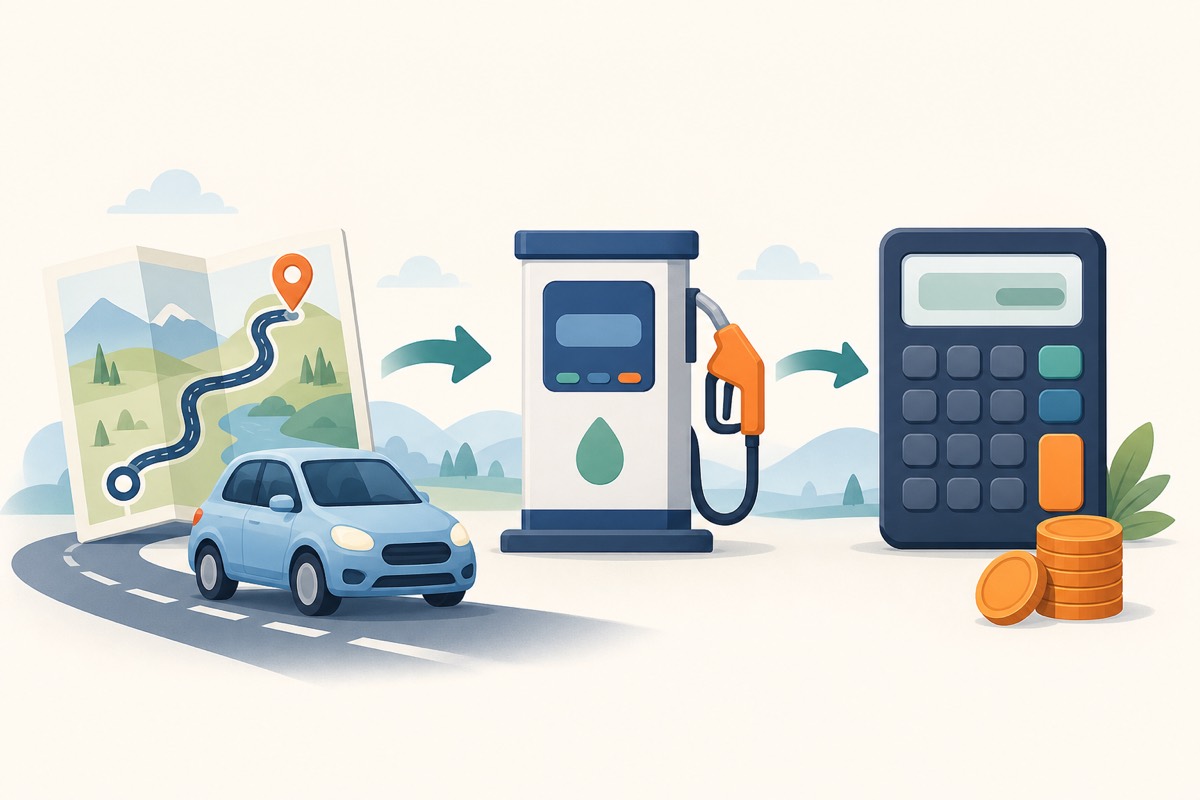
Calculate the total route distance first
Start with the kilometres you expect to drive, not just the straight-line distance between two places. A navigation route is usually a more useful starting point because it follows the roads you will actually use.
For a return journey on the same route, double the one-way distance. If the return is different, add both route estimates instead of assuming they are identical.
Turn kilometres into litres and cost
Divide the total distance by your vehicle's expected mileage in kilometres per litre. That gives an estimated number of litres. Multiply the litres by the fuel price to estimate the fuel cost.
For example, a 320 km return drive at 16 km per litre needs about 20 litres. Your final cost depends on the local price you enter and the mileage your vehicle actually achieves.
Plan for variation on the road
Traffic, steep roads, weather, passenger load, and air conditioning can increase fuel use. It is sensible to keep a buffer rather than treating the calculation as an exact promise.
Fuel is also not the whole travel budget. Add tolls, parking, food, and accommodation separately before you compare travel options.
Model the trip you will actually drive
Use the full return distance and add realistic detours for fuel stops, parking, pickup points, or route changes. If the route is uncertain, run a short, expected, and long-distance case instead of hiding the uncertainty inside one rounded number.
Mileage is an assumption, not a guarantee. A loaded car, traffic, hills, air conditioning, tyre pressure, and driving speed can move actual consumption away from the vehicle's advertised figure.
Keep fuel separate from the trip budget
Fuel is only one line in a road-trip budget. Add tolls, parking, food, accommodation, maintenance, and a small contingency separately so a low fuel estimate does not create a misleading total trip cost.
Save the distance, mileage, and fuel-price assumptions with the estimate. That makes it easy to update the budget when the route or pump price changes.
Put this guide into practice
Use the related calculators
Put the steps in this guide into practice with a focused calculator, then return here to check an assumption or compare another scenario.